Showing posts with label school. Show all posts

Wednesday, May 13, 2015

5 Most Popular Commencement Speeches

Read some of the most interesting and popular commencement speeches of all time.

George Saunders at the Graduation Ceremony 2013 in Syracuse University
"Be kind."
"What I regret most in my life are failures of kindness," Saunders said. "Those moments when another human being was there, in front of me, suffering, and I responded ... sensibly. Reservedly. Mildly."
Do those things that incline you toward the big questions, and avoid the things that would reduce you and make you trivial. That luminous part of you that exists beyond personality -- your soul, if you will -- is as bright and shining as any that has ever been.

 President Barack Obama, Morehouse Graduation Ceremony 2013
"My whole life, I've tried to be for Michelle and my girls what my father was not for my mother and me."
"Sometimes I wrote off my own failings as just another example of the world trying to keep a black man down"
"I had a tendency sometimes to make excuses for me not doing the right thing. But one of the things that all of you have learned over the last four years is there's no longer any room for excuses"

  Neil Gaiman, University of the Arts 2012
"When things get tough, this is what you should do. Make good art."
“A freelance life, a life in the arts, is sometimes like putting message in bottles, on a desert island, and hoping that someone will find one of your bottles and open it and read it, and put something in a bottle that will wash its way back to you: appreciation, or a commission, or money, or love."

"People keep working, in a freelance world ... because their work is good, and because they are easy to get along with, and because they deliver the work on time. And you don't even need all three. Two out of three is fine"

Here is an example of a funny commencement address:


Monday, March 30, 2015

Electricity is Slower Than A Turtle


You may be astounded to discover that electrons course through a common copper wire much slower than a turtle strolls.
Every wire that directs a stream of electrons, creating usable electric current, is made out of billions of particles. To move along it, the electrons need to navigate these molecules, arbitrarily crisscrossing some way or another as they do, bringing about the net stream rate, called "float speed," in a provided guidance being moderate.
For instance, assume you have a current of 14 amps and a copper wire with a cross area of 3 * 10-6 m2. Module all the numbers and you get that the electrons are moving at a rate of 3.4 * 10-4 m/s – or around 33% of a millimeter every second.
To place it in values that are less demanding to conceptualize, this works out to around 1.2 meters (4.1 feet) every hour- a rate far slower than the normal box turtle, which can cover around 800 feet in that same measure of time.
So how is it that something that is basically slower than a turtle can pretty much promptly turn on a light over a room?
Chain response.
The particles in the wire are packed together cheek to cheek, which, while it makes the going moderate, likewise has the electrons pretty much adjoining each other. At the point when the switch is turned on, because of the electrical potential distinction made by the generator, a power is made to move the electrons, with every pushing its neighbor, which thus pushes its neighbor thus on from start to finish through the wire.
Thus, while no electrons zoom through the wire to turn on the light as you may have already thought, it winds up appearing as though that is what's occurring. This is much the same as how when you turn on your spigot, water right away turns out in spite of the way that your water source may be numerous miles away.

Forces


NEWTONS 

Strengths are measured in units called newtons (N), named after English researcher Sir Isaac Newton. The span of a power can be measured utilizing a gadget called a power meter or newtonmeter. As the heap pulls on the snare, it extends a spring to give a perusing on the scale. On Earth, the power of gravity on 1 kg (2.2 lb) is 9.8 newtons.

TURNING FORCES 

In the event that an item is settled at one point and can turn around it, that point is known as a turn. On the off chance that a power follows up on the article, the item pivots the turn. The turning power is known as a torque and the impact it creates is known as a minute. The greater the power, the more noteworthy the occasion. The minute likewise increments if the power demonstrations at a more noteworthy separation from the turn.

WHEELBARROW

A wheelbarrow is allowed to turn around the expansive wheel at the front. At the point when the laborer lifts the handles, the power causes the whole wheelbarrow to swing upwards and pivot the wheel. The long body and handles of a wheelbarrow build the turning impact and make it less demanding to tip out a substantial burden.


EXPANDING MOMENTS 

It is less demanding to unscrew a nut with a spanner than with your fingers, on the grounds that the spanner's long handle expands the turning impact or snippet of the power. The extent of a minute is equivalent to the power utilized times the separation from the turn on which it acts. On the off chance that you utilize a spanner twice as long, you twofold the occasion, and the nut is twice as simple to turn.

CONSOLIDATED FORCES

At the point when strengths act in the same heading, they consolidate to make a greater power. When they act in inverse headings, they can cover each other. On the off chance that the strengths following up on an item adjust, the article does not move, yet may change shape. On the off chance that the strengths consolidate to make a general constrain in one heading, the item moves in that course.


Saturday, March 28, 2015

It's Free to Study College in Sweden


Swedish schools and colleges are free. That is correct. Completely free.

Anyway understudies there still wind up with a ton of obligation. The normal toward the start of 2013 was approximately 124,000 Swedish krona ($19,000). Certainly, the normal US understudy was conveying around 30% more, at $24,800.

Anyway recollect: Free. School in Sweden is free. That is not even all that normal in Europe any longer. While the expenses of instruction are far lower than in the US, in the course of recent decades now and again weighty charges have turned into an unavoidable truth for some European understudies. England got them in 1998. Some German states founded them after a government boycott on understudy charges was upset in the courts. Indeed, subsequent to 1995 more than 50% of the 25 OECD nations with accessible information on advanced education have redesignd their school educational cost approaches at open institions, with numerous including or raising expenses.
But, understudies in Germany and the UK have far lower obligations than in Sweden. Also, 85% of Swedish understudies graduate with obligation, versus just half in the US. To top it all off, new Swedish graduates have the most noteworthy obligation to-pay proportions of any gathering of understudies in the created world (as per evaluations of what they're relied upon to procure once they escape from school)—some place like 80%. The US, where we're continually being informed that understudy obligation is hitting emergency extents, the normal is more like 60%. Why?

Opportunity isn't free. School in Sweden is free. In any case rent isn't. What's more, nourishment isn't. Nor is the brewskie that energizes the generally rare, yet incredible, gorges in which a few Swedes share. Expenses of living in Sweden are high, particularly in urban communities, for example, Stockholm, which consistently positions among the world's most lavish spots to live. Yet once more, this stuff isn't free for understudies in other European nations either. So why do Swedish understudies wind up with more obligation? It's really basic, really. In Sweden, youngsters are relied upon to pay for things themselves as opposed to wiping of their guardian.


Tuesday, February 24, 2015

The Facts About Eclipses

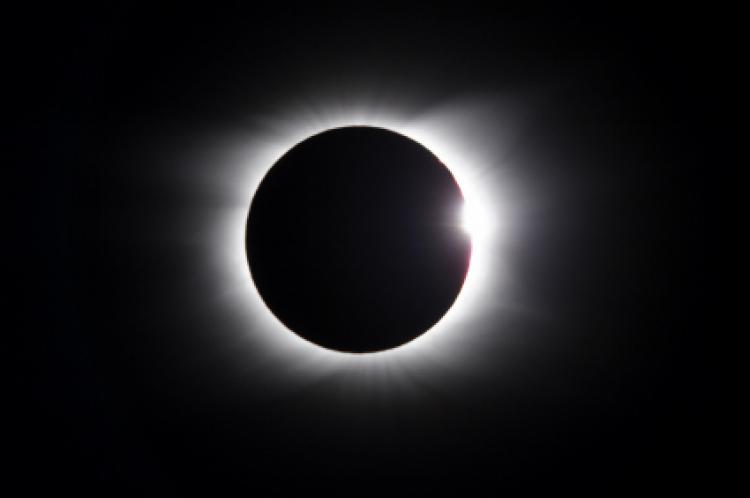
Eclipses is describe in two ways - eclipse of the sun and the eclipse of the moon. When an eclipse occur to the sun, it is called the solar eclipse. On the other hand, when it occurs to the moon it is called the lunar eclipse. If the whole part is being covered, it is called the total eclipse. If only a part, it is called the partial eclipse. Here are more facts about these two kinds of eclipses. 

Solar Eclipses
A total eclipses of the sun only occurs when the sun, moon and our world aligns in a straight line. The tilt of the moon affects how many times it happens and thus, it only occurs twice a year. When the moon pushes itself between the Earth and the Sun, it will cast a shadow to the surface of the Earth. The center of the shadow is called the umbra. The surrounding circle is called the penumbra. The umbra moves from the west to the east 1, 600 kilometers per hour. And the only people who can see the eclipse are the one that is on its path. People should wear sunglasses to protect themselves from the rays of the sun while watching it happen, especially staring for  along period of time.
Lunar Eclipses
The earth always cast a shadow on the opposite side of the sun. As the earth rotates around the sun, the shadow also moves with it. The moon, in return, orbits the earth. About once in every 29 days, the moon overtakes the earth's shadow. When the moon passes through the earth's shadow, a lunar eclipse will happen. It can be seen during the night. If the moon passes through the umbra of the earth's shadow, it is called as the umbral eclipse. If it misses the umbra, ir is called as a penumbral. 


Monday, February 23, 2015

States of Matter


There aren't just three states of matter: solid, liquid and gas. . There are actually four which are solid, liquid, gas and plasma. Here are facts about them. 
solid has a definite volume and definite shape. Its particles are held together in a fixed positions and the motions are restricted. Most solids expand slightly when heated. This property makes solids such as wood, iron and cement suitable as construction materials. 
liquid has also a fixed volume but doesn't have a fixed shape. It takes whatever the shape of a container it is in. The particles are free to move anywhere inside the container. They are a little compressible. 
gas doesn't have a fixed volume and a shape because its particles are really far away and have complete freedom of motion to assume the shape of a closed container and to fill its entire volume. Gases are highly compressible. Under increase of pressure the volume of gas decreases. It allows a large volume of oxygen to be kept in big tubes. 
Chemical and Physical Properties of Matter
Physical properties are characteristics of a substance which can be observed without changing the composition of the substance. Some examples are boiling point, melting point, density color, order, hardness, electrical and thermal conductivity,  tenacity, elasticity and plasticity. Examples are breaking sticks into small pieces, cutting a piece of paper into bits, melting an ice to a water and also freezing it back. 
Chemical properties are characteristics that a substance exhibits when it undergoes change in composition. These properties are related to the kind of chemical changes that substances undergo during chemical reactions. For instance, when coal, which is mostly carbon, burns, it combines with oxygen gas to form the gaseous compound called carbon dioxide. There are two properties, intensive and extensive properties. 


Measurement

The International System Unit [SI]
It was already a long time since the metric system was used for the first time. Although, it was officially established in 1960 during the 11th General Conference on Weights and Measures. 
Temperature
It measures the hotness or coldness of an object. It can also know if what direction is the flow of the hat. Like for an example, a glass of hot milk can be felt by the glass because heat is transferred. It always flows from a high temperature to a lower one. 
There are three temperatures scales we can choose. The three are Celsius (C), Fahrenheit (F) and  Kelvins (K). The boiling point of water is 100 degrees Celsius while its freezing point is 0 degrees Celsius. On the Fahrenheit scale, the freezing point is 32 F and the boiling point is 212 F. For Kelvin scale, the freezing point of water is 273 K and 373 K. Although when using kelvin, you do not put the degree sign. 
Derived Units
There are seven fundamental SI Units. These are the length, mass, time, electrical unit, temperature, amount of substance and luminous intensity. The mixture of these units are called derived units. One is speed which is the distance over time. Volume is a very important aspect especially during chemistry laboratory. There are many equipment to use to measure volume, examples are beaker, graduated cylinder, pipet, buret, syringe, volumetric flask and many more. The third example is the specific gravity which is the ratio of the density of any substance on a same temperature. 
Precision and Accuracy
Precision is one of the many ways on how to check measurements. It conveys how close to several measurement to a same value. Accuracy is also another way. It will tell you how close it is to the true or accepted value. 

Saturday, December 20, 2014

Famous Photographers

Think about our idols, famous celebrities, sports players, places, events, ceremonies, shocking happenings and many more popular people. Yet, we haven't thanked about the people who took those photos for the sake of us being able to see these places, people, current events and etc. We even sometimes use their photos and copyright them as our own. Therefore, in contribution to them, here are the most famous photographers and interesting facts that you should know about them.

Mario Testino

Mario's profession is a fashion photographer. His photographs have been featured in famous magazines like Vogue and Vanity Fair. Many people in the fashion industry are looking for him to be their partner. He started rough by living in an apartment located in an abandoned hospital and started selling his works to people especially to the ones who are aspiring to be models. And now, all his hardwork are paid off for his "highly polished, exotically bright ad campaigns and his exquisitely styled photographs of the couture scene all of which carry a deceptive air of nonchalance". He also had a chance to be able to photograph the late Princess Diana.

Timothy Hogan

Not only he is an award-winning photographer of luxurious goods and still life but also a director situated in new York, Los Angeles and London, a cinemotographer and a surfer. His "The FIN Project" became popular that potrays his passion and love for surfing. Simplicity is the key to his works. He was able to work with clients all over the world relating to almost everything especially fashion.

Jeremy Cowart

Jeremy has started as an artist. Because of his love for arts, he decided to study graphic design in college and even created his own graphic design company after graduating. He then knew that photography was his true love. In 2005, He became a full time photographer. He didn't just earned the appreciation of clients but also of other artists, photographers, celebrities and models. 

Want some tricks and tips?


Wednesday, December 17, 2014

Studying with Music


Almost everyone has listened to music whilst doing homework or studying, right? But have you ever wondered what music is the best ‘study music’?  Studies have shown that some music can not only focus and relax your mind, but also improve your concentration and give you short-term mind-boosting effects! 
Classical music, and in particular, baroque classical music, is well-known for relaxing the mind and body. Composers such as Bach, Vivaldi, and Telemann are the most popular when it comes to soothing and peaceful music. Recent studies revealed that baroque classical music lowered the stress and enhanced the concentration across all age groups, including young children.
The ‘Mozart effect’ is another popular study tool used worldwide. Wolfgang Amadeus Mozart, perhaps the greatest classical composer of all time, remains one of the most listened to composers of this modern era. The ‘Mozart effect’ refers to the short-term improvement of tasks performed by a listener of Mozart’s music. Such improvements include deeper concentration, lower stress levels, and improved creativity. A common belief of the Mozart effect suggests that “listening to Mozart makes you smarter”, and that an early childhood exposure to classical music has a positive impact on their mental development.
Classical music isn’t the only way to calm your mind, however. Genres such as smooth jazz, country, and even techno, can relax your body and help your focus. Researchers believe that the best music for studying is at a slow tempo, usually under 60 beats per minute. 
Other ‘study music’ include ambient sounds or pulses. This music is designed to keep your brain engaged and alert on a subconscious level. The sounds of rain, waterfalls, wind, or waves crashing against a beach, might be just what you need when studying for that upcoming exam!
Here is an example of a classical music for study period.