Showing posts with label chemistry. Show all posts

Monday, February 23, 2015

States of Matter


There aren't just three states of matter: solid, liquid and gas. . There are actually four which are solid, liquid, gas and plasma. Here are facts about them. 
A solid has a definite volume and definite shape. Its particles are held together in a fixed positions and the motions are restricted. Most solids expand slightly when heated. This property makes solids such as wood, iron and cement suitable as construction materials. 
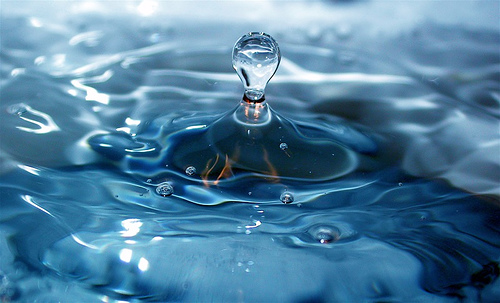
A liquid has also a fixed volume but doesn't have a fixed shape. It takes whatever the shape of a container it is in. The particles are free to move anywhere inside the container. They are a little compressible. 
A gas doesn't have a fixed volume and a shape because its particles are really far away and have complete freedom of motion to assume the shape of a closed container and to fill its entire volume. Gases are highly compressible. Under increase of pressure the volume of gas decreases. It allows a large volume of oxygen to be kept in big tubes. 
Chemical and Physical Properties of Matter
Physical properties are characteristics of a substance which can be observed without changing the composition of the substance. Some examples are boiling point, melting point, density color, order, hardness, electrical and thermal conductivity,  tenacity, elasticity and plasticity. Examples are breaking sticks into small pieces, cutting a piece of paper into bits, melting an ice to a water and also freezing it back. 
Chemical properties are characteristics that a substance exhibits when it undergoes change in composition. These properties are related to the kind of chemical changes that substances undergo during chemical reactions. For instance, when coal, which is mostly carbon, burns, it combines with oxygen gas to form the gaseous compound called carbon dioxide. There are two properties, intensive and extensive properties. 


Facts About Chemistry


Chemistry is the study of the composition of matter, its properties, and the changes it undergoes. It is a part of a body of knowledge called science. It is also considered as a practical science since it will make us comprehend our surroundings and the process of it. Chemistry is also the center of all science because the almost all careers use this branch. 
Not one part of science can only work alone. Each branch of science works together. Even if you're just a bartender, a cashier an architect or a teacher, you still have to learn even basic chemistry. For example, mixing a coffee properly which means you have the right amount of caffeine, sugar and maybe cream and the right temperature of water. Those health conscious are also aware of how much food they need to eat or what kind of food they have to intake.  
Along with geology, astronomy and physics, Chemistry is part of Physical Sciences. Chemistry is related to other science through biochemistry ( which is under biological sciences) and Chemical Physics which is under Physics. 
Technology is connected to science. In fact, it is the application of science for the purpose of making the life of the humans better. Cellphones, telephones, computers and processed food are just examples. However, technology can be a disadvantage to some people if abused. 
Cloning is one example of improvement of technology through science. Although, there had been a lot of debates relating to ethics and religion. Dolly the sheep and CC(Copy Cat) were examples of products. However, scientists argued that it was not intended to clone humans but to further understand why diseases occur and to be able to stop them. 
Another is the development of computers. They used to be really big. Now, you can carry them everywhere along with you.